What to Say to Make Car Insurance Cheaper
The words that help are specific requests, like asking for every discount you qualify for by name, not a general plea for a lower rate.
Ask for specific discounts by name, not a lower price in general
Calling your insurer and asking them to lower your rate rarely works. Asking whether you qualify for a specific discount, like a mature driver course credit, a low mileage discount, or a bundling discount, gives the person on the phone something to actually act on. Insurers have a list of discounts they can apply. They don't usually volunteer all of them unless you ask.
For a driver your age, the discounts worth naming are often tied to things you've already done or can do quickly. A completed defensive driving or mature driver course is the most common one. Low annual mileage is another, since many older drivers drive less than they used to. What applies depends on your insurer and your state, so the first step is finding out which discounts your policy is eligible for at all.
Your state decides which discounts exist
Some states require insurers to offer a discount for completing an approved mature driver course. Others leave it entirely up to the insurer. This means the same phone call can get a different answer depending on where you live, and it's worth knowing which situation you're in before you ask.
If your state mandates the discount, the conversation is simple: you took an approved course, you ask them to apply it, and you send the certificate. If your state doesn't mandate it, the insurer may still offer something similar, but it's their choice, and the discount might go by a different name.
Your state's department of insurance can tell you whether a mature driver discount is required there and what course providers count as approved. That's worth checking before you take a course, not after, since an unapproved course may not qualify for anything.
What you say matters less than what you send them
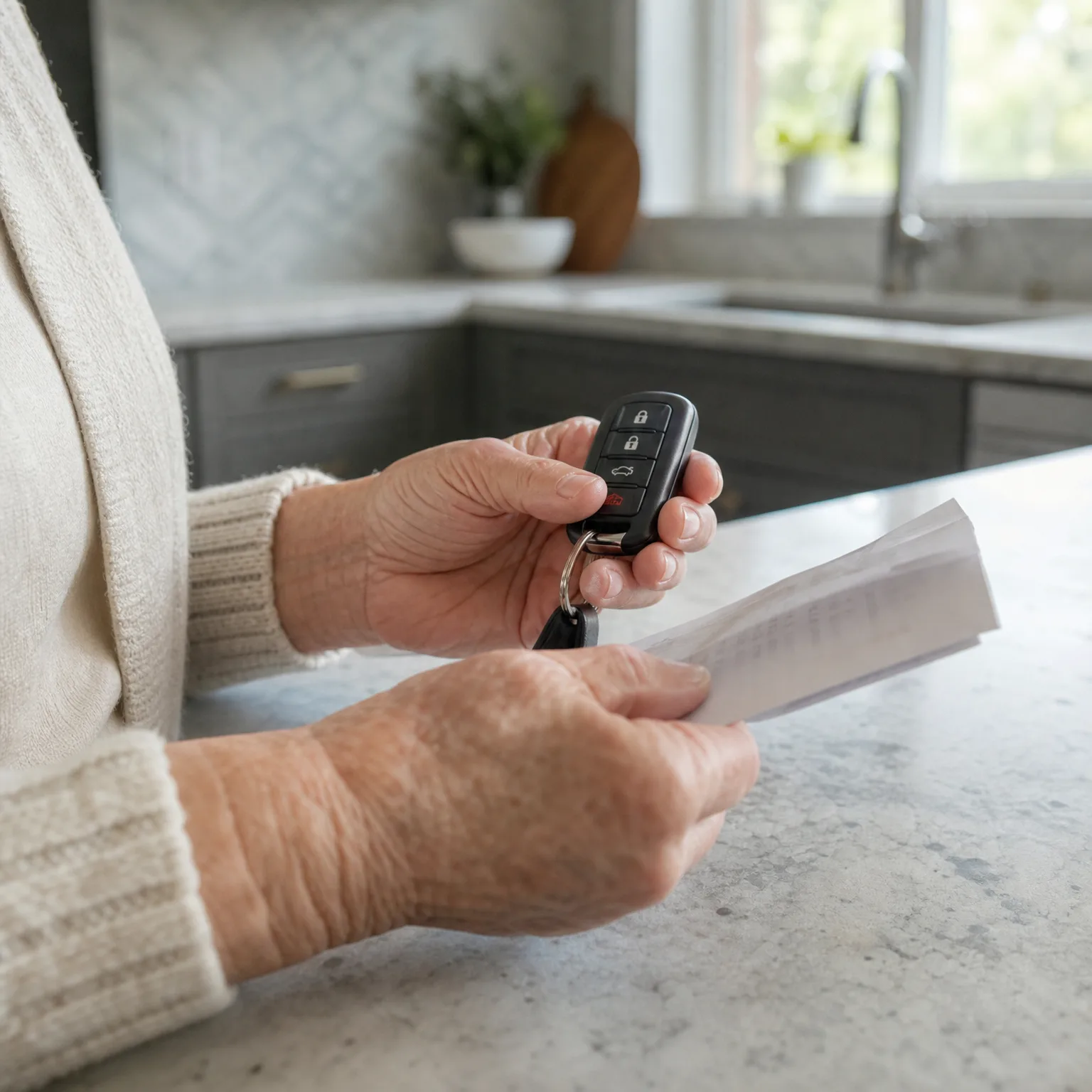
Taking a course or driving fewer miles doesn't lower your premium by itself. Your insurer has to know about it, and that usually means paperwork, not just a conversation. A course certificate, an odometer reading, proof of a second car being insured elsewhere. Saying the right thing on the phone opens the door, but the discount gets applied when you follow up with the document they asked for.
This is where most people lose the discount without realizing it. They mention the course, the representative says that's great, and nothing happens because no one sent the certificate. If you're asking about a discount, ask directly what they need from you to apply it, and ask how to send it.
It also helps to ask when the discount takes effect. Some insurers apply it at your next renewal rather than immediately, which matters if you're trying to time the request around a bill that's already due.
Questions people ask about this
Does taking a defensive driving course actually lower my insurance?
It can, but only if your insurer offers that discount and you send them proof you finished an approved course. The course itself doesn't change anything automatically. Check with your insurer first about which providers and course formats they accept, since taking the wrong one can mean redoing it.
Will my rate go up just because of my age?
Insurers set rates using many factors, and age is one of several, not the only one. Some insurers' rates rise for older drivers, others don't change much, and it varies by company and state. If your renewal went up, ask your insurer directly what changed on your policy rather than assuming age was the reason.
Should I switch insurers to get a better rate?
It depends on what your current insurer can offer you versus what you'd get elsewhere, and the only way to know is to compare. Switching can mean losing a long term customer discount with your current insurer, so it's worth asking what you'd give up before you leave.
Does low mileage actually get reported or do I have to ask for it?
You generally have to ask, and some insurers may want you to confirm it with an odometer photo or a statement. If you've started driving less, mention it specifically rather than assuming your insurer already knows.
Can I ask my insurer to review my policy without switching companies?
Yes, most insurers will do a policy review if you ask, and this is a reasonable thing to request at renewal time. Ask specifically whether you're getting every discount you're eligible for, since this is a direct question that usually gets a direct answer.
See what other insurers would charge for the same coverage before you decide what to ask your current one for.
Before your next renewal, call your insurer and ask two things: which discounts you currently have applied, and which ones you might qualify for but haven't claimed. Have your policy number and any course certificates or mileage records ready. If you've taken a driving course recently, confirm it was an approved provider in your state and send the certificate in writing, not just by mentioning it on the phone. Ask when any new discount would take effect, since it may not apply until your next renewal date. If you're not sure your current insurer is giving you the best price even with discounts applied, get a few quotes from other companies to compare against what you're paying now.