Do Senior Citizens Pay More for Auto Insurance
Age by itself isn't why rates go up. What changed is usually your record, your car, or how one insurer prices your age group compared to another.
Not because of age alone
Turning 65 doesn't trigger a rate increase. Insurers price risk, and age is only one part of that, mixed in with your driving record, where you live, and the car you drive. Some senior drivers see their rate go down, because fewer miles driven and a long clean record count for something.
Where age does matter is at the edges. A few insurers raise rates once a driver reaches an advanced age, on the idea that reaction time and vision change over time. That's not universal and it's not automatic. It depends on the insurer you have, and it's worth asking directly whether your company does this and at what point.
Your driving record still decides more than your age
A clean record is the strongest thing working in your favor at any age. If you haven't had a ticket or a claim in years, that history carries more weight with most insurers than the fact that you had a birthday.
The reverse is also true. A recent accident or a moving violation will raise your rate regardless of how old you are. Insurers look back several years, so a clean stretch now doesn't erase something that happened recently.
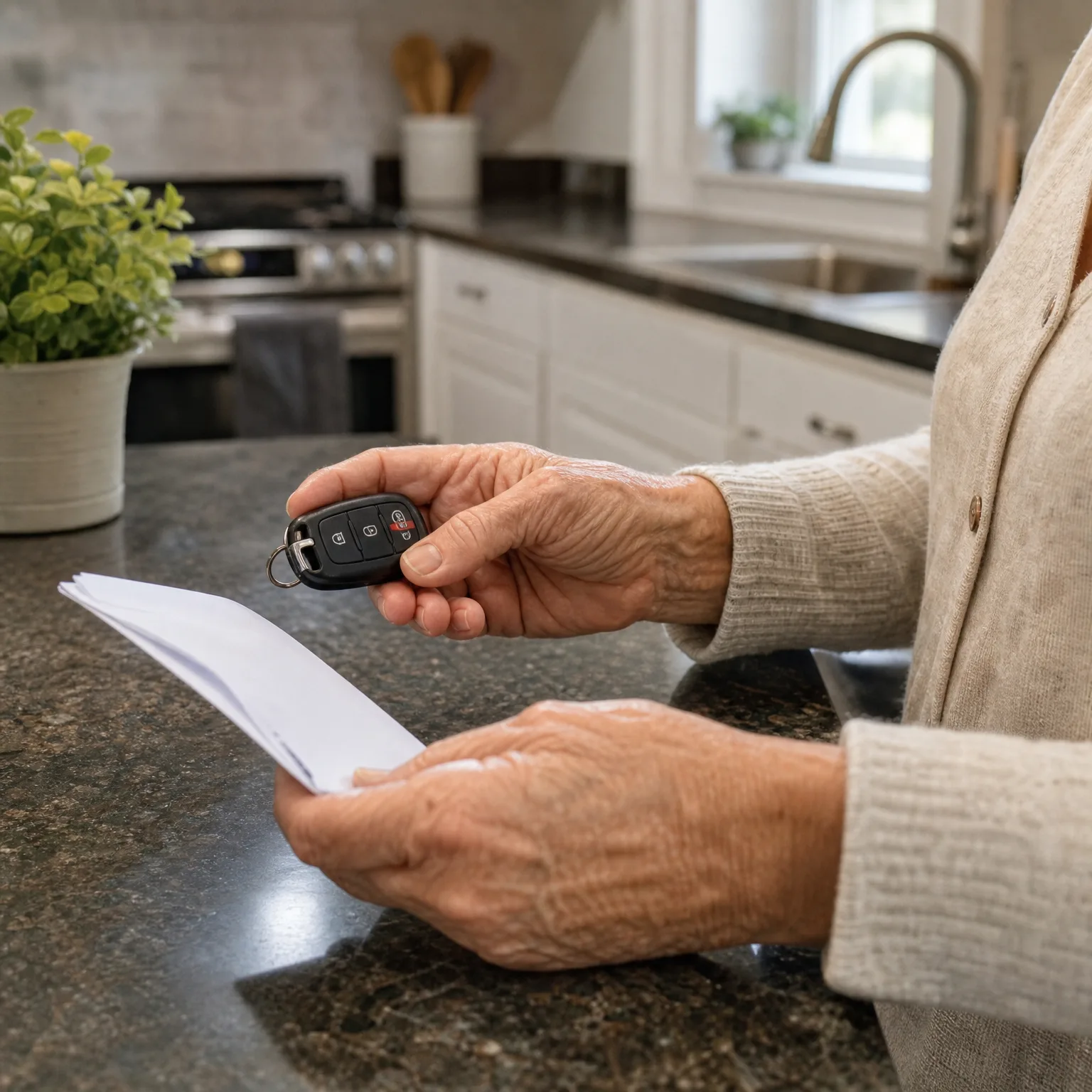
If you're not sure what's on your record, ask your insurer or check with your state's DMV. Mistakes happen, and a ticket that was dismissed or a claim that wasn't your fault sometimes still shows up and needs to be corrected.

What your insurer does with age, specifically
Every insurer sets its own rules for how age factors into price. Some don't adjust for it at all past a certain point. Others do, and the only way to know is to ask your own insurer directly how they treat your age group and whether anything changes at renewal.
This is also where discounts come in. Many insurers offer a reduction for completing an approved defensive driving or mature driver course, but you usually have to send them the certificate yourself. Finishing the course isn't enough if that paperwork never reaches your insurer.
Some states require insurers to offer this discount to older drivers who complete an approved course. Whether yours does, and which courses qualify, is set by the state, so check with your state's insurance department or your insurer before you pay for one.
Questions people ask about this
Will my car insurance go up automatically when I turn 65?
No, turning 65 doesn't trigger an automatic increase. If your rate changes around that time, it's worth asking your insurer what specifically changed, since it may be unrelated to your age.
Do I have to retake a driving test as a senior to keep my insurance rate?
That depends on your state's licensing rules, not your insurer. Some states require vision tests or in-person renewals at a certain age. Check with your state's DMV to see what applies to you.
Can my insurer drop me because of my age?
Age alone isn't a valid reason to cancel a policy. Insurers can decline to renew for reasons tied to risk, like a lapse in a required test or a pattern of claims, so ask your insurer directly if you get a non-renewal notice.
Does a mature driver course lower my rate right away?
Not until your insurer has the certificate. Completing the course doesn't change anything on its own. You need to send proof to your insurer and ask them to apply it to your policy.
Should I drop coverage like collision once my car is older?
That depends on what your car is worth and whether you could afford to replace it without that coverage. It's less about age and more about the car's value, so it's worth checking what your car is currently worth before deciding.
See what other insurers would charge someone with your record before you renew.
Pull your renewal notice and your driving record before you do anything else. Call your current insurer and ask directly whether your age affected the new price, and whether a mature driver course would lower it. If you've taken a course recently, confirm they actually received the certificate. Then compare what other insurers would charge someone with your exact record and vehicle, since a different company may weigh your age and history differently. Check with your state's DMV about any vision test or renewal rule tied to your age, separate from your insurance. Do this before your current policy renews, not after.