Choosing a Car as a Senior Citizen
The right car for an older driver is one that's easy to see out of, easy to get in and out of, and equipped with safety features that help with slower reflexes.
Choose for visibility, ease of entry, and modern safety features
A car that suits an older driver well tends to sit a little higher, has large windows and low beltlines so you can see the road and nearby cars without straining, and doesn't ask your knees and back to fold down into a low seat or climb up into a high one. Beyond comfort, the features that matter most are the ones that compensate for slower reaction time: automatic emergency braking, blind spot warning, and a backup camera.
What counts as the right fit depends on the driver, not just the age on their license. Someone with stiff shoulders needs a wide door opening and a seat that doesn't require twisting. Someone with reduced night vision benefits most from good headlights and uncluttered dashboard lighting. There's no single best car for every older driver, but there is a short list of things worth testing in person before you decide.
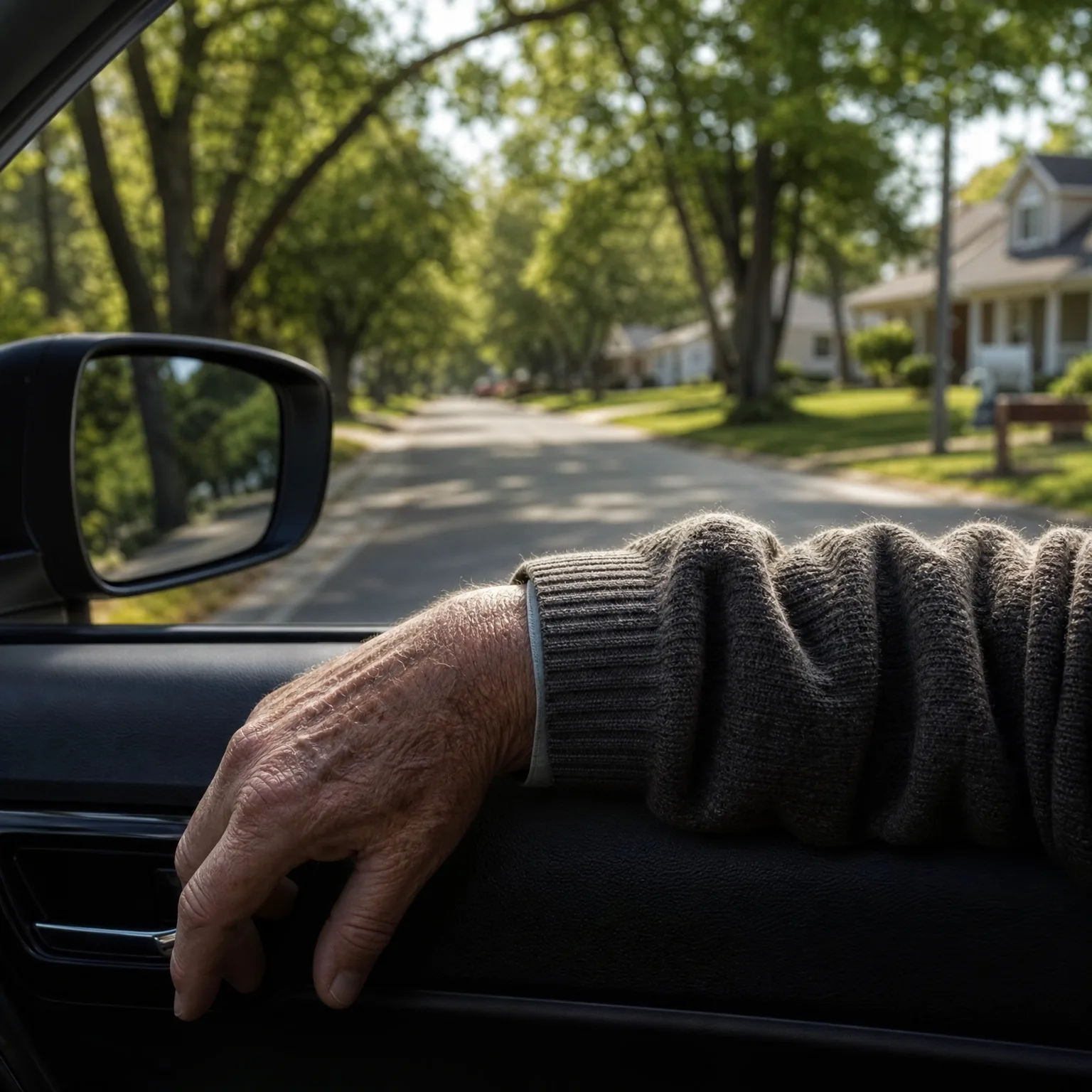
Your own driving record and health shape the right choice more than your age does
Two drivers in their seventies can need very different cars. One still drives highway distances and wants adaptive cruise control and strong headlights for night trips. Another mostly drives locally and cares more about parking sensors and a tight turning radius. Think about the driving you actually do now, not the driving you used to do.
If you've had any recent changes in vision, hearing, or flexibility, test the car with those in mind. Sit in it. Reach for the seatbelt. Turn to check the back seat. A car that looks fine on paper can still be hard to use if the door is heavy or the dashboard display is hard to read in sunlight.
If a doctor or an eye exam has flagged something that affects your driving, some states ask you to report it, or ask more often at renewal. Check with your state's licensing agency what applies to you, since the rules differ from state to state.
A car with more safety features isn't a substitute for an honest look at your own driving. It's a way to add a margin on top of the driving you're already doing.
The car you choose affects what you pay for insurance, not just how safe you are
Insurers price a policy partly on the car itself. Features like automatic emergency braking and anti-theft systems can work in your favor. A car that's expensive to repair, or that's a common target for theft, works against you regardless of how carefully you drive it.
It's worth asking an insurer or agent how a specific make and model is likely to affect your premium before you buy, rather than after. The same safety features that help you avoid an accident are often the ones an insurer takes into account when setting your rate, so the two decisions, which car and what it costs to insure, aren't separate.
If you're also enrolled in or considering a defensive driving or mature driver course, ask your insurer directly whether it affects your rate for this car, and what they need from you to apply it. Some insurers want the completion certificate sent in separately rather than assuming it from the DMV record.
Questions people ask about this
What car features help most with slower reaction time?
Automatic emergency braking and blind spot warning are the two that do the most, because they act when a driver doesn't react in time. A backup camera and parking sensors help in tighter situations like reversing out of a driveway or parking lot. Ask to test these features during a test drive rather than taking the sales sheet's word for it.
Is a bigger car safer for an older driver?
Not necessarily. Larger vehicles can offer more protection in a crash, but they're often harder to park, harder to see out of in some directions, and heavier to maneuver, which can work against an older driver more than it helps. A car sized to what you can comfortably control usually serves better than one chosen for size alone.
Should I get a car with a touchscreen or physical buttons?
Physical buttons for frequently used controls, like climate and volume, are generally easier to use without looking away from the road. Touchscreens can bury common functions in menus, which asks for more attention than a dial or button does. If you test a car with a touchscreen, try adjusting something while the car is moving in a parking lot to see how distracting it actually is.
Does my insurer need to know if I change cars?
Yes. Your policy is written around the specific car on it, so switching cars means telling your insurer so your coverage and premium reflect the new vehicle. Call before you finalize the purchase if you want to know how the change will affect your rate.
Can a family member help choose without taking over the decision?
Yes, and it often works best when they come along for test drives rather than making the decision from a distance. What matters is testing the specific things that affect you, like getting in and out of the seat or reaching the pedals comfortably, since those are hard to judge from a brochure or a phone call.
See how the car you're considering compares on insurance before you commit to it.
Make a short list of two or three cars and test drive each one, paying attention to how easy it is to get in and out, how well you can see out of all the windows, and whether the controls you'll use most are easy to reach. Bring along anyone who usually rides with you. Before you buy, call an insurer or agent and ask how each car on your list is likely to affect your premium, and whether any safety features or completed driving courses apply to a discount. Check with your state's licensing agency if you're unsure whether any medical reporting rules apply to you at renewal. Keep the car's safety features and your own comfort with them as the deciding factor, not the size or style of the car alone.